
Daniel McKay Reviews
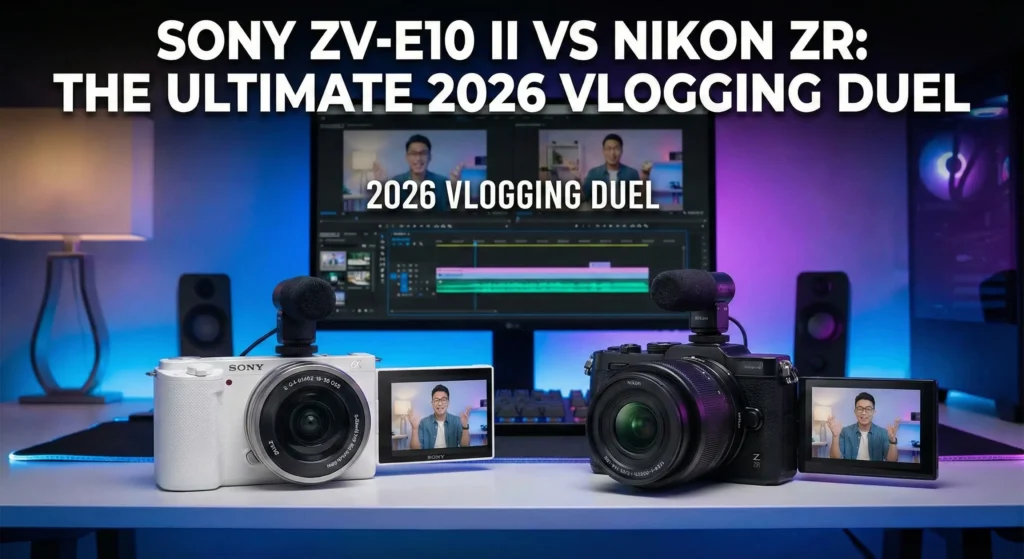
Sony ZV-E10 II vs Nikon ZR: The Ultimate 2026 Vlogging Duel
Choosing between the Sony ZV-E10 II and Nikon ZR is a critical decision for content creators in 2026. As demand for high-quality video rises, your camera choice will shape your channel’s aesthetic and your day-to-day workflow.
In this guide, we compare these two very different approaches to modern vlogging: Sony’s creator-first AI automation versus Nikon’s full-frame, RAW-heavy “mini cinema” philosophy. Whether you shoot YouTube, TikTok, or Instagram, the goal here is simple—identify which body delivers the best value for your style and budget.
Sensor performance: Sony ZV-E10 II vs Nikon ZR
The biggest separation between these cameras is sensor size. The Sony ZV-E10 II uses a 26MP APS-C sensor. That keeps the system compact and easy to carry all day, while still delivering beautiful 4K/60p footage with only a minimal crop. For creators who prioritize portability and ease of use, Sony’s approach makes a lot of sense.
The Nikon ZR steps up to a 24.5MP full-frame partially stacked sensor. This brings noticeably shallower depth of field and stronger low-light performance. More importantly, it can record 6K/60p RAW internally, pushing the look closer to a true cinematic workflow. The ZR’s image feels less like a standard vlog camera and more like a compact cinema tool.
Sony advantage: Lightweight APS-C system with excellent 10-bit 4K quality.
Nikon advantage: Full-frame sensor with 6K RAW and RED color science.
Sony ZV-E10 II vs Nikon ZR: comparison table
Sensor type
Sony ZV-E10 II: 26MP APS-C
Nikon ZR: 24.5MP full-frame
Max resolution
Sony ZV-E10 II: 4K/60p 10-bit
Nikon ZR: 6K/60p RAW
Audio quality
Sony ZV-E10 II: 3-capsule stereo
Nikon ZR: 32-bit float internal
Weight (body)
Sony ZV-E10 II: 377g
Nikon ZR: 540g
Stabilization
Sony ZV-E10 II: Electronic only
Nikon ZR: 5-axis IBIS (7.5 stops)
Autofocus and creator-friendly features
Sony’s advantage is creator-first automation. The ZV-E10 II includes advanced AI subject recognition that tracks eyes accurately—even when you’re wearing glasses. It also includes a strong “Product Showcase” mode that shifts focus from face to object instantly, making it ideal for reviews, tech demos, and tutorials.
Nikon closes the gap with the Expeed 7 processor and tracking algorithms inherited from the flagship Z9. Subject tracking is fast and dependable. However, Sony remains the more intuitive choice for creators who want minimal setup and touch-first controls while recording.
Audio innovation for video content
Nikon’s headline feature is 32-bit float internal audio, allowing worry-free recording without clipping or distortion. Its internal microphones also use Nokia OZO technology for spatial sound, making it a strong all-in-one solution for creators who don’t want to carry external gear.
The Sony ZV-E10 II’s upgraded three-capsule mic is excellent, but it doesn’t offer 32-bit float recording internally. Instead, Sony leans into a clean hot-shoe digital audio path—meaning adding a compact Sony shotgun mic is simple and highly effective. Both cameras can deliver professional sound, but Nikon offers more internal safety and flexibility.
Final verdict: which vlogging camera wins?
The right choice depends on your production level and editing workflow. If you want a light, smart, affordable camera that’s designed for solo creation—and you value fast turnaround—the Sony ZV-E10 II is the better fit. Its massive library of affordable E-mount lenses also makes it a strong long-term system.
If you want the absolute best image and sound quality in a compact package, the Nikon ZR sits in a different category. Just remember: 6K RAW files demand a powerful computer and more time in post. Many vloggers will prefer Sony’s efficient 4K for speed. Both cameras are excellent—but they serve very different types of creators.