
Reviews by Daniel McKay
Best Anamorphic Mirrorless Lenses: 2026 Cinema Guide
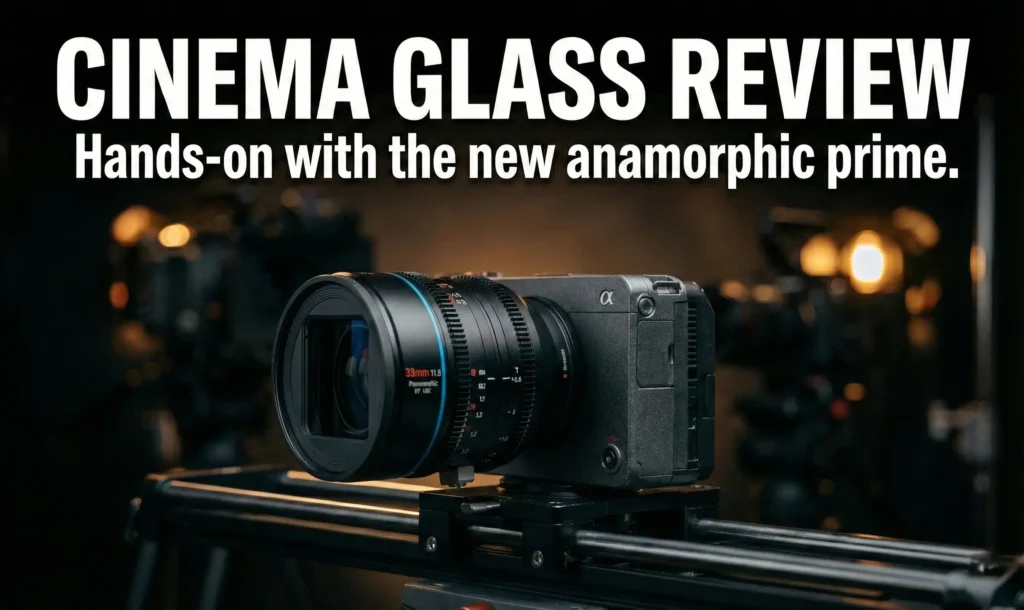
Finding the best anamorphic mirrorless lenses is the most effective way to elevate your video production in 2026. For a long time, anamorphic cinematography was reserved for elite Hollywood productions with massive budgets. However, the market has changed significantly over the last few years. Today, independent filmmakers can access the iconic widescreen look without spending tens of thousands of dollars. Specifically, the introduction of autofocus in anamorphic glass has revolutionized the way solo creators work. Consequently, this guide will help you navigate the top options currently available for your mirrorless camera system. Get started with our expert recommendations below.
Choosing the best anamorphic mirrorless lenses allows you to capture a unique aesthetic that spherical lenses cannot replicate.
However, several manufacturers now offer anamorphic lenses with reliable autofocus.
Therefore, you should choose the version that best matches the story you want to tell.
Why You Need the Best Anamorphic Mirrorless Lenses
Choosing the best anamorphic mirrorless lenses allows you to capture a unique aesthetic that spherical lenses cannot replicate. Anamorphic optics squeeze the image horizontally to fit more of the scene onto your sensor. Therefore, you get a wider aspect ratio, oval-shaped bokeh, and those famous horizontal lens flares. In addition, these lenses provide a sense of depth and texture that feels more organic. Because modern sensors are so sharp, the slight softness of anamorphic glass adds a pleasing, film-like quality to your digital footage.
In 2026, technology has solved the biggest hurdle for anamorphic users: focusing.
1. Blazar Talon 1.5x AF Series
The Blazar Talon 1.5x AF series currently sits at the top of our list. It provides a perfect balance between modern convenience and classic cinema style. Specifically, these lenses are designed for Sony E and Nikon Z mounts. They allow you to use your camera’s internal tracking systems with incredible precision. Consequently, you can film moving subjects while maintaining that distinct widescreen perspective. In addition, the internal motors are nearly silent during operation. The 1.5x squeeze ratio is ideal for 16:9 sensors. When you de-squeeze the footage, you get a stunning 2.66:1 aspect ratio. Moreover, the Talon series produces beautiful blue horizontal flares that are not too distracting. The build quality is robust, yet the lenses remain light enough for gimbal use. Therefore, if you are a professional videographer who needs speed and style, the Blazar Talon series is a mandatory investment. Specifically, the 35mm and 50mm versions offer the most versatility for general production.
2. Laowa Nanomorph 1.5x Series
If you prioritize portability, the Laowa Nanomorph series offers some of the best anamorphic mirrorless lenses on the market. Most anamorphic lenses are bulky and heavy due to their complex internal elements. However, Laowa successfully miniaturized this technology. These lenses are roughly the size of a standard prime lens. Specifically, they are designed for filmmakers who use drones or compact gimbals. Consequently, you can achieve cinematic results in tight spaces or high-action environments. Despite their small size, the Nanomorphs deliver a professional 1.5x squeeze. They are available in different flare colors, including blue, amber, and silver. Amber flares provide a warm, vintage feel. In contrast, silver flares adapt to the color of your light source. Furthermore, these lenses have a very short minimum focus distance. This allows you to get close-up shots with incredible background separation. Because they are affordable and versatile, they are a favorite among travel filmmakers in 2026. Therefore, they represent an excellent value for creators on the move.
3. Blazar Remus 1.5x Full Frame
The Blazar Remus series is designed for those who want a “vintage” look without the vintage price tag. While the Talon series focuses on technology, the Remus series focuses on character. Specifically, these lenses offer a softer, more dream-like rendering that many indie filmmakers prefer. They cover full-frame sensors, which is rare for anamorphic lenses in this price bracket. Consequently, you can use them on high-end full-frame cameras without any vignetting issues. The flares on the Remus lenses are more pronounced and organic. In addition, the bokeh is strikingly oval, giving your footage an unmistakable cinematic identity. Because they are manual focus only, they require a bit more skill to operate. However, the focus throw is smooth and precise. Therefore, they are excellent for narrative films or music videos where you have time to set up each shot. They represent one of the most artistic options for full-frame sensors today. Moreover, the lightweight design makes them easy to balance on most mirrorless bodies.
4. Sirui Saturn 35mm T2.9 Carbon Fiber
Sirui was the first company to make anamorphic lenses affordable for the masses. The Sirui Saturn 35mm is a standout choice for creators who need a lightweight setup. Specifically, it uses carbon fiber in its construction to keep the weight under 400 grams. Consequently, it is one of the most comfortable lenses for vlogging or long handheld sessions. It features a 1.6x squeeze ratio, which provides an even wider look than the 1.5x options. The Saturn series is known for being very sharp in the center of the frame. While it has some distortion at the edges, this often adds to the cinematic charm. Moreover, the neutral flares are subtle and professional. Because it is so affordable, it is the perfect entry point for anyone curious about anamorphic shooting. If you want to see how these lenses perform in real-world scenarios, you can check out Sirui’s official gallery. Furthermore, it pairs excellently with our previously reviewed Sony mirrorless lenses.
Atlas Orion Series (The Professional Standard)
For those with a larger budget, the Atlas Orion series remains a top-tier contender. While these lenses are much more expensive, they offer a level of mechanical precision that is hard to match. Specifically, they are built like tanks and can withstand the rigors of a professional film set. They offer a 2x squeeze, which is the traditional anamorphic standard. Consequently, the bokeh is extremely stretched, and the depth of field appears very shallow. The Orion lenses are often the first choice for rental houses. However, many successful production companies in 2026 choose to own them as a primary asset. They provide a clean, high-contrast image with minimal chromatic aberration. Moreover, the interchangeable mount system allows you to use them on PL or EF mount cameras. Because they are heavy, you will need a robust camera rig. Therefore, they are the gold standard for high-end commercials and feature films. Specifically, they deliver the most “Hollywood” look of any lens on this list.
Related pages
Always check your camera’s “Open Gate” capabilities
Take your time to research the different squeeze ratios
Affiliate disclosure: Some pages may contain affiliate links. If you buy through those links, we may earn a commission at no extra cost to you.