
Reviews by Daniel McKay
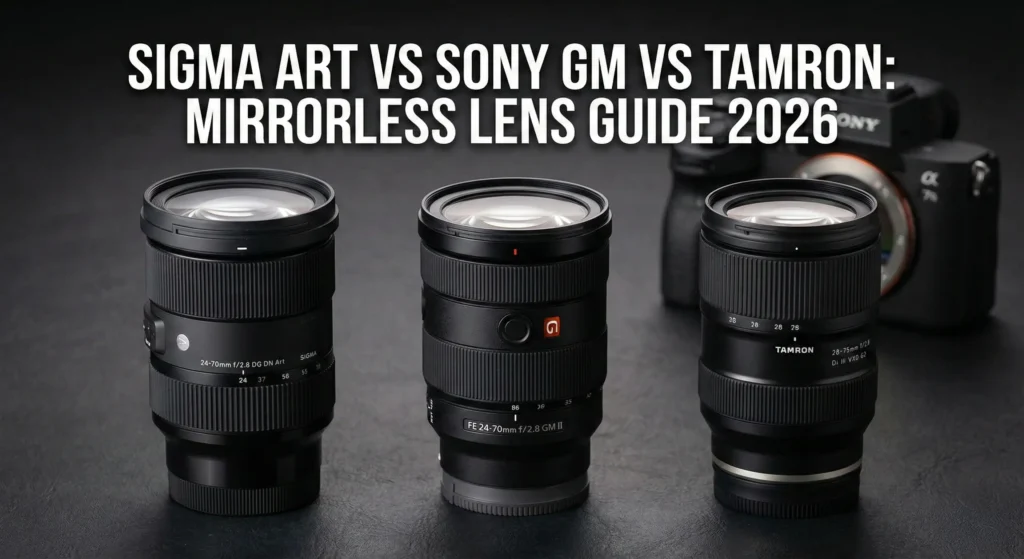
Sigma Art vs Sony GM vs Tamron: Mirrorless Lens Guide 2026
Deciding between sigma art vs sony gm is the most frequent dilemma for mirrorless photographers in 2026. For a long time, the choice was simple: you bought native lenses for performance or third-party lenses to save money. However, the landscape has shifted dramatically over the last few years. Specifically, companies like Sigma and Tamron now produce optics that rival or even surpass original manufacturer glass. Consequently, professional creators must evaluate each brand based on specific technical needs rather than just brand loyalty. This comprehensive guide will help you understand the nuances of each ecosystem to optimize your gear investment. Get started with our expert comparison below.
Why the Sigma Art vs Sony GM Debate Matters
In any sigma art vs sony gm discussion, you are comparing the pinnacle of modern lens engineering. Sony’s G Master line represents the absolute best the manufacturer can offer. Specifically, these lenses are designed to unlock every feature of high-end Alpha cameras. In contrast, the Sigma Art series focuses on optical purity and premium build quality. Therefore, choosing between them involves a trade-off between native integration and pure optical performance. Moreover, Tamron has carved out a unique niche by offering innovative focal lengths that neither Sony nor Sigma currently provide.
In 2026, the stakes are higher because camera sensors have reached incredible resolutions. Specifically, if you use a 61-megapixel or 100-megapixel body, your lens becomes the primary bottleneck for image quality. Consequently, a lower-quality lens will prevent you from seeing the full detail your sensor can capture. Furthermore, the rise of AI-driven autofocus means that the communication speed between the lens and the camera is vital. Therefore, understanding how these three brands interact with your camera body is essential for professional success. Choosing between sigma art vs sony gm is no longer just about the price tag.
Sony G Master (GM): The Native Performance King
When evaluating sigma art vs sony gm, the Sony G Master series always wins on technical integration. Sony designed these lenses to be the perfect partners for their own camera bodies. Specifically, they utilize XD linear motors that provide the fastest and quietest autofocus on the market. Consequently, if you shoot fast-moving sports or wildlife, a GM lens is almost always the superior choice. In addition, Sony often reserves its most advanced features exclusively for native glass.
Furthermore, Sony GM lenses are built for the future of cinematography. Most modern GM lenses feature minimal focus breathing and are fully compatible with in-body stabilization systems. Moreover, the G Master series holds its resale value better than any other brand. Consequently, it remains the safest long-term investment for working professionals.
Sigma Art: The Purist’s Choice for Quality
The Sigma Art line is the strongest contender in the sigma art vs sony gm rivalry regarding raw image quality. Sigma’s philosophy is to prioritize optical perfection above all else. Specifically, they often use more complex optical designs with additional glass elements. Consequently, many photographers find that Sigma Art lenses produce extremely sharp images with virtually no distortion.
Sigma has also mastered the tactile experience of a lens. Their Art series lenses are built with metal and Thermally Stable Composite materials, often featuring physical aperture rings and customizable buttons. While historically heavier, the 2026 versions have reduced weight significantly. Furthermore, Sigma lenses are typically priced far below Sony GM equivalents, offering exceptional return on investment.
Tamron: The Master of Utility and Innovation
While often excluded from direct sigma art vs sony gm comparisons, Tamron is arguably the most innovative brand in 2026. Instead of copying competitors, Tamron creates focal lengths that solve real-world problems. The Tamron 35-150mm f/2-2.8 is a prime example, effectively replacing multiple lenses in a single body.
Tamron lenses are also among the lightest in their class. This makes them ideal for travel creators and gimbal operators. Their latest autofocus systems are fast enough for most professional scenarios, making Tamron the best utility choice for solo creators who value flexibility and portability.
Technical Differences in Sigma Art vs Sony GM Performance
A critical factor in the sigma art vs sony gm debate is Sony’s software limitations on third-party lenses. Specifically, burst rates are capped on flagship cameras, which can impact professional sports shooters. Additionally, native lenses receive firmware updates directly through the camera body, whereas third-party lenses often require external tools.
Sony’s advanced stabilization and focus breathing compensation also work best with native lenses. While Sigma and Tamron lenses perform well, the overall experience is more seamless with Sony GM. Therefore, convenience and integration may justify the higher price for some professionals.
Building a Hybrid Kit for Maximum ROI
In 2026, the smartest professionals build hybrid kits. You might rely on Sony GM for mission-critical work, Sigma Art for studio perfection, and Tamron for lightweight travel flexibility. This approach delivers maximum performance while significantly reducing overall gear costs.
The sigma art vs sony gm decision should be made on a lens-by-lens basis. Invest in native glass for your most-used focal lengths and save money with third-party options elsewhere. This strategy also diversifies your visual look across projects.
Final Verdict: Which Brand Should You Choose?
The winner of the sigma art vs sony gm debate depends entirely on your professional needs. Choose Sony G Master for sports, cinema, and mission-critical work. Choose Sigma Art for maximum sharpness and studio precision. Choose Tamron for versatility, innovation, and lightweight travel efficiency.
In conclusion, all three brands are producing world-class optics in 2026. The competition benefits photographers by pushing innovation forward. Whether you choose Sony, Sigma, or Tamron, you are investing in a golden age of lens design. Take time to test your options and build a kit that supports your creative vision.
Affiliate disclosure: Some pages may contain affiliate links. If you buy through those links, we may earn a commission at no extra cost to you.