
Reviews by Daniel McKay
Sennheiser MKE 600 vs Rode NTG4+ (2026 Comparison)
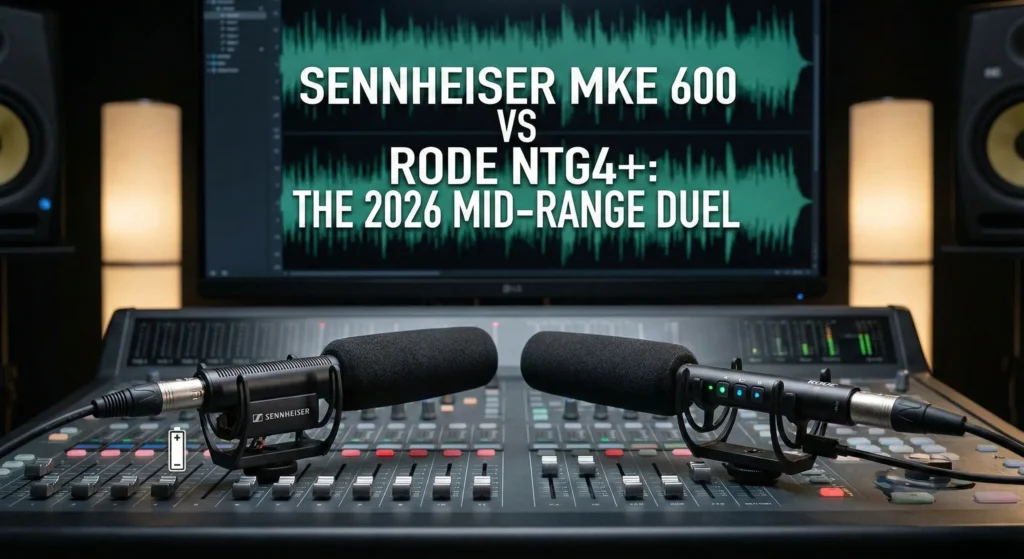
Sennheiser MKE 600 Rode NTG4+ comparisons dominate the mid-range shotgun microphone market in 2026. Both microphones provide professional-grade XLR audio for an affordable price. Consequently, they are the most common upgrades for creators moving away from basic on-camera microphones.
Furthermore, both units offer internal battery options for mirrorless camera users. Notably, your choice will depend on whether you prefer a neutral sound or a finished bright signature. Therefore, you must evaluate your specific shooting environment before making a final purchase.
Key Takeaways
- Power Versatility: The Sennheiser uses a single AA battery, while the Rode features a built-in rechargeable lithium battery.
- Audio Profiles: Sennheiser offers a flat, natural response for cinematic work; Rode provides a crisp high-frequency boost for interviews.
- Build Reliability: Both microphones feature rugged metal construction designed to withstand professional field use and weather.
Why the Sennheiser MKE 600 Rode Choice Matters
Professional audio quality is the foundation of every successful film or documentary. Therefore, selecting the right Sennheiser MKE 600 Rode model is a critical step in your gear progression.
These microphones bridge the gap between hobbyist gear and high-end Hollywood equipment. Furthermore, they offer balanced XLR outputs which prevent electrical interference.
Notably, they allow you to record clean dialogue in noisy environments. Consequently, you can achieve a cinema-style sound without spending thousands of euros.
Furthermore, both mics are incredibly durable and will last for many years of heavy use.
Sennheiser MKE 600: The Neutral Powerhouse
The Sennheiser MKE 600 is often called the winner in the Sennheiser MKE 600 Rode battle for natural sound. It is famous for its honest frequency response that captures voices exactly as they are.
Furthermore, its side-rejection is exceptional, making it a favorite for documentaries. Notably, it runs for 150 hours on a single AA battery.
Consequently, it is a reliable workhorse for filmmakers who travel to remote locations. Furthermore, it features a robust low-cut filter to remove background rumble.
Therefore, it provides a very clean signal that is easy to mix in post-production.
Rode NTG4+: The Modern Feature-Rich Option
The Rode NTG4+ is frequently cited as the Sennheiser MKE 600 Rode alternative for corporate videographers.
It features digital switches on the microphone body for high-frequency boosts and pads. Furthermore, its internal battery lasts for over 150 hours and charges via a simple USB port.
Notably, the bright sound signature helps dialogue stand out on smartphone speakers without much editing. Consequently, it is the more convenient choice for creators who need a ready-to-go audio track.
Furthermore, the digital switches offer a tactile way to change settings in the field.
Battery Life and Power Flexibility
When analyzing the Sennheiser MKE 600 Rode models, you must consider how you will power them.
The Sennheiser’s use of a AA battery is a major advantage for some. If the battery dies, you simply swap it for a new one in seconds.
However, the Rode NTG4+ uses a permanent internal battery. Consequently, if it runs out of power, you must charge it via USB.
Furthermore, both microphones can run indefinitely using 48V phantom power from a cinema camera.
Notably, using phantom power often results in a slightly better signal-to-noise ratio. Therefore, your choice depends on your camera system.
Tonal Signatures and Mixing Flexibility
The Sennheiser MKE 600 Rode comparison is really a debate about audio philosophy.
Sennheiser believes in a flat response that gives the editor total control. Furthermore, this uncolored sound feels very natural and realistic.
However, Rode believes in giving the user a finished sound immediately. Notably, the NTG4+ emphasizes the frequencies that make speech clear.
Consequently, you spend less time using EQ in your editing software. Furthermore, the Rode’s built-in high-frequency boost can be toggled on or off.
Therefore, it offers a bit more flexibility for different vocal types.
Build Quality and Professional Ergonomics
Professional gear must be able to survive accidental drops and rough handling.
Consequently, both the Sennheiser MKE 600 Rode options feature all-metal housings. They feel very solid and high-end in the hand.
Furthermore, the Sennheiser is slightly shorter and lighter than the Rode. Notably, this makes it easier to balance on a long boom pole.
Therefore, your boom operator will experience less fatigue during a long shoot day.
Furthermore, both microphones include a shock mount and a basic foam windscreen.
Notably, these accessories ensure you can start recording as soon as you open the box.
Performance in High-Humidity Environments
Extreme weather can cause many condenser microphones to fail or produce static.
Therefore, humidity resistance is a key factor in the Sennheiser MKE 600 Rode decision.
Sennheiser has a long history of building microphones that work in tropical jungles.
Furthermore, the MKE 600 uses high-quality components that resist moisture.
Notably, the Rode NTG4+ is also well-built but lacks the same legacy of extreme weather performance.
Consequently, if you film primarily in humid or rainy locations, the Sennheiser might be the safer bet.
Furthermore, always use a proper deadcat windscreen in these conditions.
Connectivity and Camera Interface
Both microphones use a standard three-pin XLR connector.
Therefore, you can use them with any professional audio recorder or cinema camera.
Furthermore, you can use an XLR-to-3.5mm adapter to connect them to mirrorless cameras.
Notably, the internal battery in both the Sennheiser MKE 600 Rode models makes this possible.
Consequently, you do not need an expensive external power supply.
Furthermore, using a balanced XLR cable allows you to place the microphone far away from the camera.
Therefore, you can get the microphone closer to the subject’s mouth for better sound quality.
Pricing and Long-Term Value
In terms of budget, both the Sennheiser MKE 600 Rode microphones sit in the $250 to $350 range.
This represents incredible value for the level of performance they provide.
Furthermore, these microphones do not become obsolete quickly.
Notably, a good shotgun microphone can serve you for over a decade.
Consequently, the cost per year of ownership is extremely low.
Furthermore, both Sennheiser and Rode offer excellent warranties.
Therefore, you can feel confident in your investment.
Notably, the Sennheiser tends to hold its resale value slightly better than the Rode.
Using the Microphones for Voiceovers and Podcasts
While they are designed for video, both the Sennheiser MKE 600 Rode mics work well in a studio.
Many creators use them for YouTube voiceovers or podcasting.
Furthermore, the directional nature of these microphones helps to ignore room reflections.
Notably, this is very helpful if you are recording in a room that hasn’t been acoustically treated.
Consequently, you get a clean, dry sound that feels professional.
Furthermore, using a shotgun mic for a podcast gives you more freedom to move your head.
Therefore, it is a versatile addition to any home studio.
Final Verdict: Sennheiser or Rode?
In conclusion, the Sennheiser MKE 600 Rode NTG4+ choice depends on your specific audio taste.
If you want a neutral, cinematic sound and the flexibility of AA batteries, buy the Sennheiser MKE 600.
However, if you prefer a bright, modern sound and the convenience of a rechargeable battery, buy the Rode NTG4+.
Both microphones will significantly improve your audio quality over any on-camera mic.
Consequently, your production value will soar.
Furthermore, you will find both microphones on professional sets around the world.
Invest in quality today and ensure your audience hears every word clearly.
Affiliate disclosure: Some pages may contain affiliate links. If you buy through those links, we may earn a commission at no extra cost to you.