
Daniel McKay Reviews
Nikon Z8 2026 Review: Is It Still Worth Buying Today?
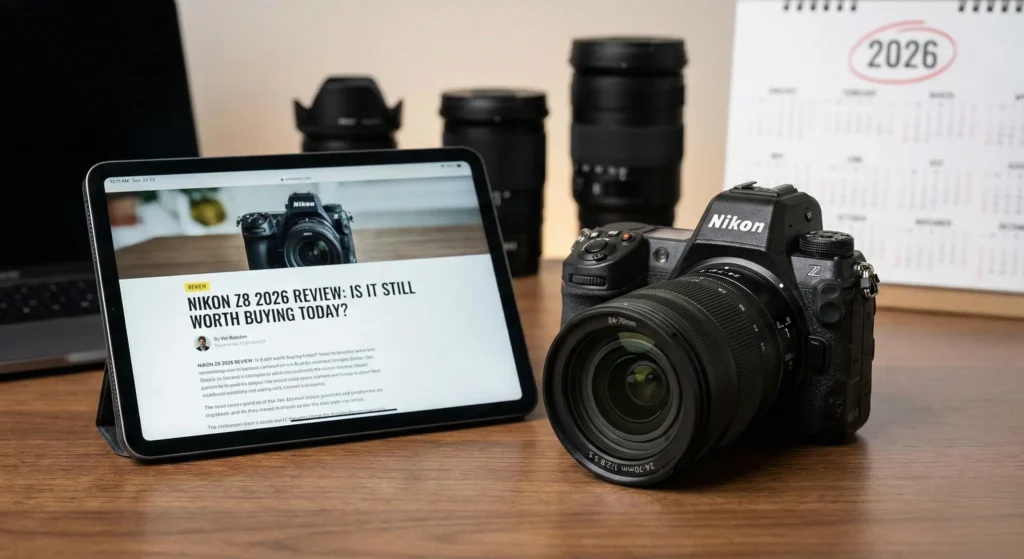
In 2026, many photographers are asking a fair question: is the Nikon Z8 still a relevant tool for high-end professional work? At first glance, a three-year-old camera might seem outdated in a fast-moving industry. However, the reality is quite different. While digital imaging continues to evolve, the foundation of this camera remains incredibly strong.
In this review, we break down why the Z8 continues to hold serious value—whether you’re upgrading from an older DSLR or looking for a powerful second body. We’ll also examine how its technology stacks up against newer releases in the current year.
The power of the stacked sensor in 2026
The heart of the Nikon Z8 experience is its 45.7MP stacked CMOS sensor. This design delivers extremely fast readout speeds that many newer mid-range models still cannot match. It also eliminates the need for a mechanical shutter entirely, enabling completely silent shooting—ideal for quiet wedding ceremonies or sensitive wildlife situations.
Just as important, the stacked architecture dramatically reduces rolling shutter distortion. Fast-moving subjects—like a golf swing or a bird’s wings—stay straight instead of bending into “jello.” Many newer non-stacked cameras still struggle here, which is why the Z8 retains a meaningful technical advantage over more consumer-grade releases.
Firmware 3.0 and modern AI performance
Longevity has become a hallmark of the Nikon Z system. The Firmware 3.0 update has significantly refreshed autofocus behavior, bringing advanced AI subject recognition performance in line with the flagship Z9. Tracking for birds, cars, and humans is now noticeably “stickier,” especially in difficult low-light conditions.
Video performance has also improved through software. You can record 8K/30p internally for longer sessions with far less anxiety about overheating, and the N-RAW format remains a major advantage for flexible color grading. With these updates, the Z8 feels less like a legacy model and more like a modern 2026-ready workhorse.
Nikon Z8 2026 performance comparison
Sensor type
Nikon Z8 (2026 status): Full-frame stacked CMOS
Competitive 2026 mid-range: Standard BSI CMOS
Mechanical shutter
Nikon Z8 (2026 status): None (electronic only)
Competitive 2026 mid-range: Yes (hybrid)
AF system
Nikon Z8 (2026 status): AI-enhanced 3D tracking
Competitive 2026 mid-range: Standard subject tracking
Build quality
Nikon Z8 (2026 status): Pro-grade weather sealed
Competitive 2026 mid-range: Consumer / weather resistant
Market value
Nikon Z8 (2026 status): Excellent (used & new)
Competitive 2026 mid-range: High (new release price)
Market value and final verdict
Now for the financial reality: buying a Nikon Z8 in 2026 can be a smart business move. Because launch pricing has dropped naturally over time, the used market often offers outstanding deals. That means you can get flagship-level performance for something closer to a mid-range price point.
Just as importantly, the Z-mount lens ecosystem is now mature, with strong options across multiple budgets. The Z8 is far from obsolete—instead, it has settled into its role as one of the most reliable modern workhorses. If you value durability, speed, and high resolution, it remains one of the best choices you can buy today.
Next step: Check the official Nikon firmware center to ensure your body is running the newest AI algorithms for 2026.