
Daniel McKay Reviews
Sony a7 V vs Nikon Z6 III: The Ultimate Hybrid Camera Duel 2026
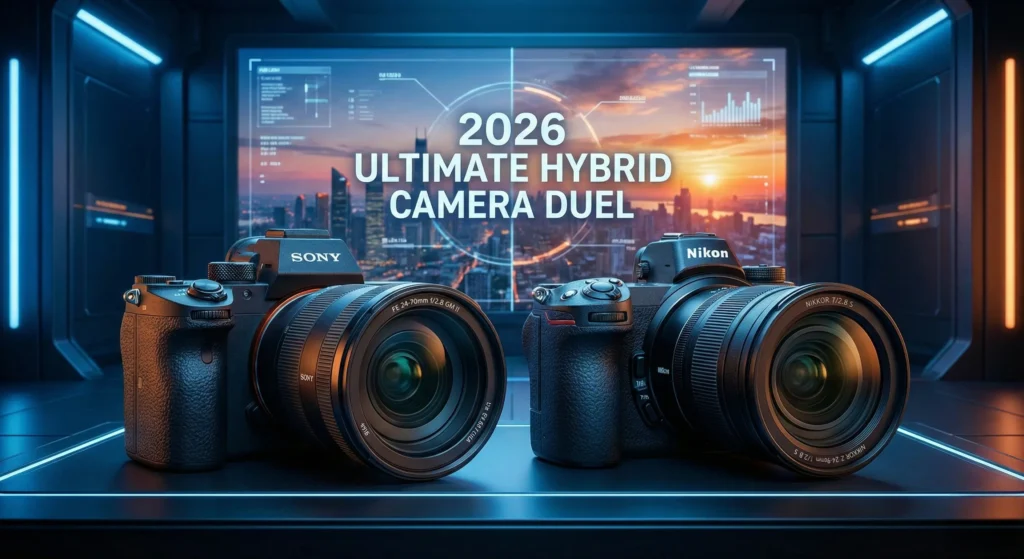
Choosing between the Sony a7 V and Nikon Z6 III is a major decision for creators in 2026. Both cameras sit at the heart of the mid-range professional market, but each brand has taken a very different path to excellence. Sony continues refining its industry-leading automation and resolution, while Nikon has focused on raw video power and pro-level handling.
In this comparison, we break down the differences that actually matter on real shoots. Whether you’re a wedding photographer, a hybrid creator, or a narrative filmmaker, understanding these nuances will help you pick the body that fits your workflow.
Sensor resolution and image quality
The most obvious difference is pixel count. The Sony a7 V uses a 33MP partially stacked BSI sensor, giving you more room for cropping and higher fine detail for large prints. That resolution has become a sweet spot for hybrid shooters who lean slightly toward photography.
The Nikon Z6 III uses a 24.5MP partially stacked sensor. While it has fewer pixels, it delivers faster readout speed—meaning less rolling shutter distortion during action. It also performs exceptionally well in low light thanks to larger individual pixels and strong high-ISO behavior.
Sony advantage: Higher resolution for detailed landscape and portrait work.
Nikon advantage: Faster sensor readout and cleaner high-ISO performance.
Autofocus and AI intelligence
This is where the battle gets intense. Sony includes a dedicated AI processing chip in the a7 V, enabling advanced subject recognition across humans, animals, insects, and vehicles. It can hold eye focus even as subjects turn away, which is a major advantage for fast-paced event work and unpredictable movement.
Nikon has made huge strides with the Expeed 7 processor. The Z6 III inherits professional tracking algorithms from the flagship Z9, and it performs extremely well in demanding scenarios. Sony still holds a slight edge in “sticky” autofocus during complex video movement, which can matter for solo creators who can’t constantly monitor the screen.
Video capabilities for filmmakers
If video is your priority, the Nikon Z6 III is the more aggressive tool. It offers 6K internal RAW recording, giving filmmakers major flexibility in post-production and color grading. It also supports higher bitrates than the Sony, which helps retain detail during heavy grading and motion-rich scenes.
The Sony a7 V delivers excellent 10-bit 4K video and a highly usable workflow, but it lacks Nikon’s internal RAW options. Instead, Sony leans into S-Cinetone for a pleasing look straight out of camera—ideal for high-volume creators who need fast turnaround without deep grading.
Sony a7 V vs Nikon Z6 III: comparison table
Resolution
Sony a7 V: 33 megapixels
Nikon Z6 III: 24.5 megapixels
Video quality
Sony a7 V: 4K/120p (cropped)
Nikon Z6 III: 6K/60p RAW (internal)
Viewfinder
Sony a7 V: 3.69M-dot
Nikon Z6 III: 5.76M-dot (4000 nits)
AF system
Sony a7 V: Dedicated AI chip
Nikon Z6 III: Expeed 7 (Z9 tech)
Best for
Sony a7 V: High-resolution photography
Nikon Z6 III: High-end video and action
Ergonomics and professional handling
How a camera feels in the hand matters—especially for long shoots. The Nikon Z6 III features a brighter 5.76M-dot EVF, making it much easier to work with in direct sunlight. The body also feels more rugged and “pro tool” in character, closer to traditional workhorse cameras.
The Sony a7 V is slightly more compact, which can be a major advantage for travel shooters and creators using smaller gimbals. Sony’s E-mount ecosystem also offers a wider range of third-party lenses from brands like Sigma and Tamron, often making the overall system more affordable long-term.