
Reviews by Daniel McKay
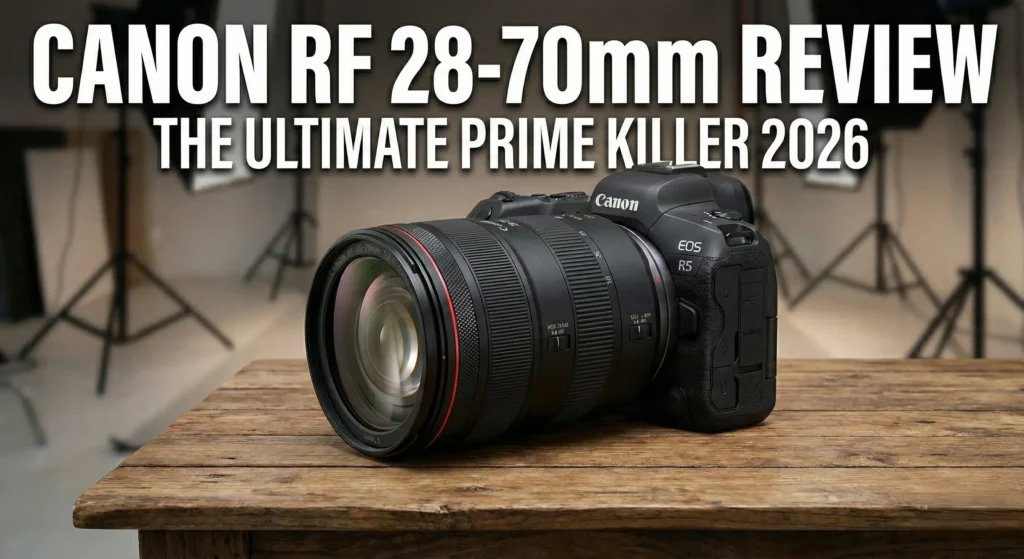
Canon RF 28-70mm Review: The Ultimate Prime Killer 2026
Our canon rf 28-70mm review explores why this lens remains a legendary tool for professional photographers in 2026. While most standard zoom lenses provide a constant f/2.8 aperture, Canon pushed the limits of physics with this constant f/2 masterpiece. Consequently, this lens has earned the nickname “Prime Killer” because it can effectively replace an entire bag of fixed focal length lenses. Therefore, if you shoot weddings, fashion, or commercial projects, this might be the most valuable investment for your RF-mount system. Read our full analysis below to discover its true potential.
Why the Canon RF 28-70mm Review Matters Today
Specifically, a canon rf 28-70mm review is essential in 2026 because the landscape of the RF mount has expanded significantly. Canon recently released a lighter f/2.8 IS STM version, which has created a dilemma for many buyers. However, the original f/2L USM version remains in a class of its own for high-end optical performance. Therefore, choosing between the “Goliath” f/2 and the “David” f/2.8 requires a clear understanding of your professional needs. In addition, modern sensors with over 60 megapixels demand lenses that can resolve extreme detail without blurring.
Optical Quality and Prime-Level Sharpness
Furthermore, this lens was a statement piece when it first arrived. It proved that the wide diameter and short flange distance of the RF mount could enable designs that were impossible on older SLR systems. Consequently, the f/2 aperture provides a shallow depth of field and low-light capability usually reserved for primes. While it lacks internal image stabilization, the powerful IBIS in cameras like the EOS R5 II manages the weight effectively. Similarly, the build quality is exactly what you would expect from the L-series. Therefore, it is built to survive years of heavy daily use in various weather conditions.
Key Performance Areas
Optical Quality and Prime-Level Sharpness
In any canon rf 28-70mm review, the discussion of sharpness is the most important factor. Specifically, this lens delivers spectacular results that rival or even beat many professional prime lenses. At f/2, the center sharpness is incredibly high across the entire zoom range. Consequently, you can shoot wide open with total confidence, knowing your subject will be pin-sharp. Furthermore, the micro-contrast and color rendition are classic Canon L-series quality. Therefore, your skin tones will look natural and healthy right out of the camera.
In addition to sharpness, the bokeh rendering is exceptionally smooth. Specifically, the nine-blade circular aperture creates beautiful, oval-shaped out-of-focus highlights. This creates a “3D pop” effect that helps your subject stand out from a busy background. Similarly, the lens handles flare and ghosting with advanced coatings. However, you might notice some slight barrel distortion at the 28mm end if you shoot architectural lines. Fortunately, modern camera bodies apply automatic corrections that fix this instantly. Consequently, the final image always looks professional and well-balanced.
Handling the Weight and Ergonomics
We must address the physical size in this canon rf 28-70mm review. Specifically, this lens is a massive piece of equipment that weighs approximately 1,430 grams. This makes it heavier than most 70-200mm f/2.8 zooms. Consequently, using it for a ten-hour wedding day can be physically taxing on your wrists and forearms. Therefore, we highly recommend using a professional dual-camera harness or a robust strap system. Similarly, the 95mm filter thread means that high-quality polarizers and ND filters will be more expensive than standard sizes.
Despite the weight, the ergonomics are very well-designed. Specifically, the lens features a customizable control ring that allows you to change settings like ISO or exposure compensation. In addition, the zoom and focus rings operate with a smooth, damped feel. Therefore, the lens feels like a precision instrument in your hands. Furthermore, the autofocus system utilizes a ring-type USM motor. This motor is exceptionally fast and silent, which is vital for candid moments. Consequently, while the lens is a “beast,” it is also one of the most reliable tools you can own.
Autofocus Performance in Low Light
Specifically, the f/2 aperture provides a massive advantage for autofocus systems. Because the lens lets in twice as much light as an f/2.8 zoom, the camera’s AF sensor can work more effectively in dark venues. Consequently, in this canon rf 28-70mm review, we found that it tracks eyes and faces with incredible “stickiness.” Even in dimly lit reception halls or during sunset sessions, the lens rarely hunts for focus. Similarly, the speed of the USM motor ensures that you never miss a fleeting expression.
Furthermore, the lens is almost parfocal. This means that if you focus at 70mm and then zoom out to 28mm, the subject remains in focus. Therefore, it is also a fantastic choice for videographers who need to adjust their framing during a shot. While it lacks a dedicated “Nano USM” motor, the ring-type USM is still smooth enough for most cinematic work. However, you should be aware that the lens becomes slightly longer when zooming out. Consequently, if you are using a gimbal, you might need to re-balance the setup when changing focal lengths.
Comparing the f/2 against the f/2.8 IS STM
In 2026, many creators are reading a canon rf 28-70mm review to decide between the f/2 and the newer f/2.8 version. Specifically, the f/2.8 IS STM is nearly three times lighter and significantly more affordable. Consequently, for travel and casual street photography, the smaller lens is much more practical. However, the f/2L version offers a specific “look” that the f/2.8 cannot replicate. Therefore, if you want the ultimate subject separation and a professional presence, the f/2 is the only choice. Similarly, the build quality of the L-series is superior for professional environments.
In addition, the f/2.8 version includes built-in image stabilization. This is a major benefit for older camera bodies that lack IBIS. However, for users of the R5, R6, or R3 series, the gain from internal lens stabilization is less noticeable. Therefore, the choice really comes down to whether you value portability or pure optical power. Specifically, if you want to replace your 35mm and 50mm f/1.8 primes, the f/2 zoom is the perfect solution. Consequently, it simplifies your workflow by reducing the need for constant lens changes during a shoot.
Final Verdict: Is the Beast Worth It?
To conclude this canon rf 28-70mm review, we believe this lens remains the king of standard zooms in 2026. Specifically, it offers a level of creative freedom that no other lens can match. While it is heavy and expensive, the ability to have three or four prime lenses in a single body is priceless for event work. Therefore, you should consider it a specialized tool for those who prioritize image quality above all else. Similarly, its professional build ensure it will be a staple in your kit for the next decade.
However, if you shoot handheld video all day or prefer to travel light, you should look at the f/2.8 alternatives. Specifically, the weight of the f/2 can become a barrier to your creativity if you are constantly tired from carrying it. Consequently, you must weigh your physical stamina against the optical benefits. For more information on Canon optics, you can check the official Canon lens catalog. Furthermore, if you are looking for wider options, read our guide on the best Sony mirrorless lenses. In conclusion, if you can handle the weight, this lens will change the way you see light.
Affiliate disclosure: Some pages may contain affiliate links. If you buy through those links, we may earn a commission at no extra cost to you.